AI level designLevels that ramp up. Every one winnable.
Evonx does the game level design for you: it plans the difficulty curve, builds each level from your game's own pieces, then has its own player clear every one before you see it. You get the levels, the moves each one gives, and proof each can be beaten.
Hard every 5 levels, super hard every 10 · a win pays 20 base + 10/star + 30 first clear, hard +20, super hard +40 · curve 1 → 9
Proof, not promises
Played before you play it.
The level generator plays every level it builds. The balls a level gives are set against what its player needed, so a hard level is tight, never impossible. On the super hard levels the margin is zero.
| # | Level | Tier | Pieces | Balls given | Solver | Spare |
|---|---|---|---|---|---|---|
| 001 | The wall 1 | easy | 20 | 19 | solvable · min 12 | 7 |
| 005 | Can pyramid 5 | hard | 16 | 15 | solvable · min 12 | 3 |
| 008 | The arch 8 | easy | 21 | 9 | solvable · min 6 | 3 |
| 010 | Royal checker 10 | super hard | 72 | 21 | solvable · min 21 | 0 |
| 015 | Royal checker 15 | hard | 72 | 18 | solvable · min 15 | 3 |
| 020 | Royal checker 20 | super hard | 72 | 27 | solvable · min 19 | 8 |
| 023 | The arch 23 | normal | 50 | 12 | solvable · min 8 | 4 |
| 028 | Castle 28 | hard | 86 | 30 | solvable · min 30 | 0 |
| 030 | Royal checker 30 | super hard | 114 | 32 | solvable · min 32 | 0 |
| 039 | Castle 39 | super hard | 128 | 25 | solvable · min 24 | 1 |
Level 23 · 16 jars, 26 cans, 5 crates, 2 planks, 1 tnt · knocked off with 8 balls on its belt; 12 given
A difficulty curve, not a wall
New pieces arrive on schedule.
Levels start with small stacks of cans and grow to castles of 128 pieces. Each new piece gets its own first level, so the player meets one new thing at a time: planks and jars at 8, pillars at 9, crates and TNT at 10.
The same eight shapes come back with harder mixes, so a player who learned the arch at level 8 meets it again at 23 with jars, crates and TNT in it.
 CanLv 1
 PlankLv 8
 JarLv 8
 PillarLv 9
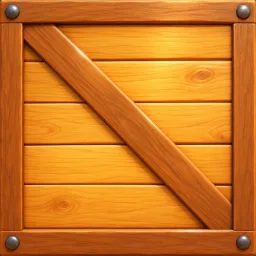 CrateLv 10
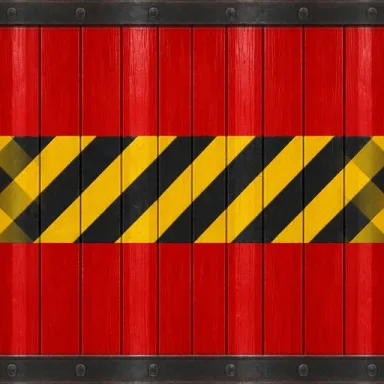 TNTLv 10
Rhythm
Hard every 5, super hard every 10.
The schedule is part of the game's design: a hard level every fifth, a super hard one every tenth. Winning pays more on the hard ones, and boosters unlock along the way: the big ball at level 3, the storm at 6, the bomb at 11.
The loop, as Evonx wrote it
- The structure rides a conveyor belt over the sea, out at one side of the screen and back in at the other. The shot is timed and led to where a piece will be.
- A ball knocks what it meets back off the shelf; what stood on it drops into the gap; a pillar topples as one; a barrel of TNT goes off.
- Every piece off the platform wins. Out of balls with pieces still standing, the world settles, then more balls for coins, or the loss.
content/spec.json · loop
How it works
From one sentence to forty levels.
Writes the rules
The loop, the pieces and how each one behaves go into the game's spec first, along with the curve, the rhythm and what unlocks when.
Builds the levels
A level generator lays out each level from the game's own shapes and pieces (procedural generation, checked by play), harder as the curve climbs, with a new piece introduced on its own level.
Plays every one
The generator's player clears each level and sets the moves it gives. A level it cannot clear shows up grey in the Design tab as a fault to fix.
Questions
Level design, answered.
Can every level actually be won?
Every Conveyor Smash level was cleared by the generator's player before it shipped: 40 of 40. The balls a level gives are set against that run, so the super hard ones give exactly what the solver needed and no more.
How does Evonx decide how hard a level is?
It follows a difficulty curve (1 to 9 in Conveyor Smash) and a rhythm: a hard level every 5th, a super hard one every 10th. The Design tab colours each level by its tier so you see the shape of the whole game at once.
Can I change the curve or add levels?
Yes. Ask in the chat, for example "add 20 levels with a gentle difficulty curve". The Design tab shows what the game will load, and a click on any bar opens that level in the preview.
Does it work for puzzle games too?
Yes. Puzzle templates carry their own solvers: in a sort puzzle the solver finds the moves that clear the board, and the level records the minimum it took.
Describe the game. Get forty levels with it.
Start free, play the first level in the browser, and open the Design tab to see the whole curve.
Start free