Short and smooth
A rubber brush, a deep shampoo and a long rinse remove dead hair and leave labradors, whippets and staffies with a visible shine.
Short-haired labs, curly poodles, fluffy ragdolls: each needs something a little different. Here is how we handle the main coat families.
Your groomer picks tools and timing to suit the coat, not the other way round.
A rubber brush, a deep shampoo and a long rinse remove dead hair and leave labradors, whippets and staffies with a visible shine.
Poodles and doodles get a thorough comb-out and a scissored finish that stays neat for six to eight weeks.
Huskies, shepherds and retrievers receive a de-shedding bath and a patient blow-out that frees the undercoat without shaving it.
Hand-stripping or careful clipping keeps the texture crisp and the colour rich on schnauzers and terriers.
Spaniels, shih tzus and Maltese are brushed section by section, so tangles are lifted rather than cut.
A calm bath, a brush-out and a nail trim in a quiet room, with a lion cut for coats that mat despite regular combing.
Poodles, doodles and any dog with a coat that grows quickly or tangles at the legs and ears.
Most medium-length coats, as well as dogs who like to roll in things on the weekend walk.
Double-coated breeds benefit from a de-shedding visit in autumn and spring, when they blow their undercoat.
Rarely. Shaving can damage how the coat regrows and removes natural protection from heat and sun. We prefer de-shedding unless a vet recommends a clip.
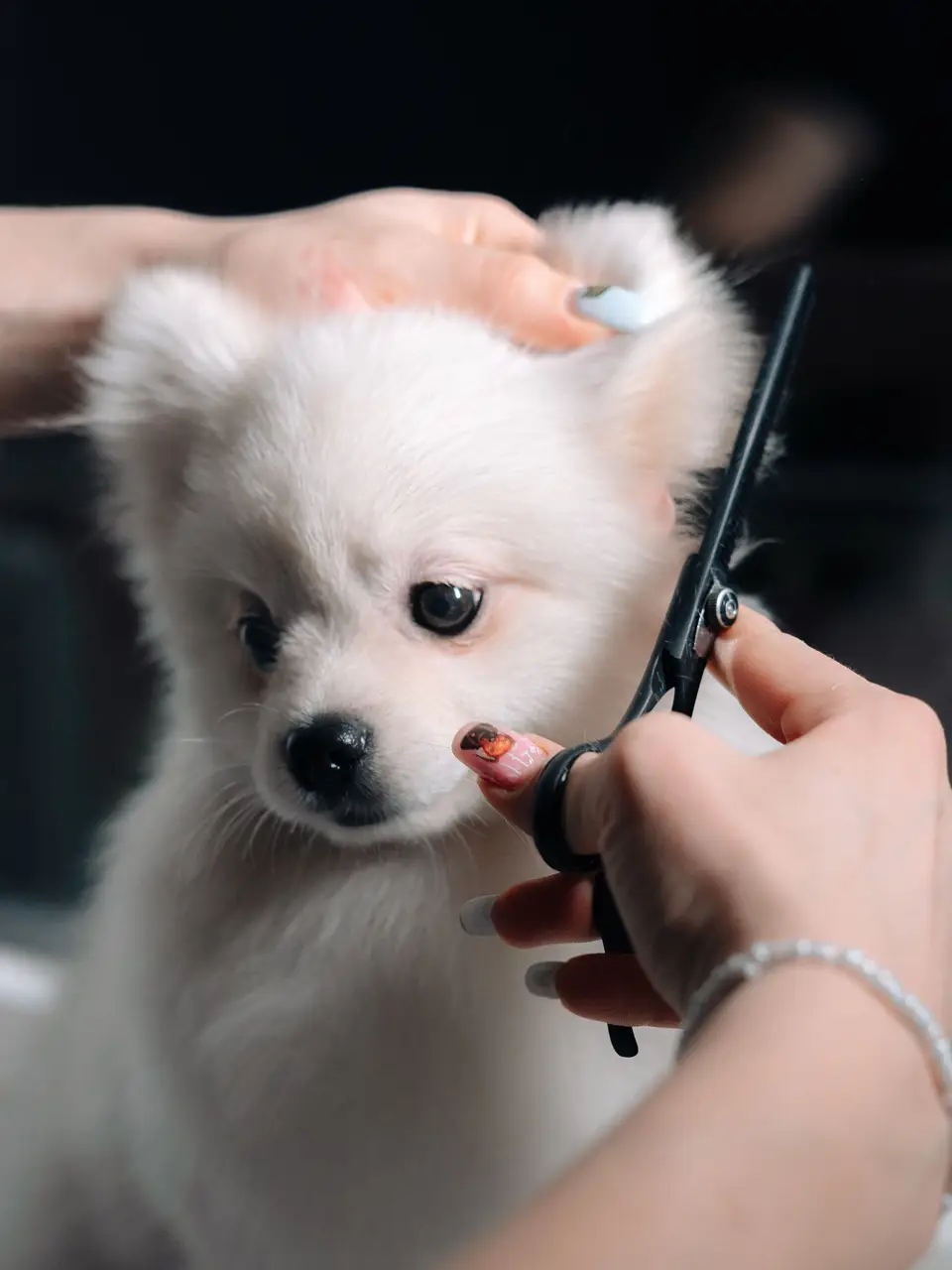
Yes, from twelve weeks and once their vaccines are complete. A short introductory appointment with a gentle wash teaches a puppy that the salon is a happy place.
We will try, with frequent breaks. If the mats are tight to the skin, the kindest option is a short clip, and your groomer will talk it through before starting.
Send a photo of your pet's coat and we will suggest a package and how long to book.